
In an industry where failure is not an option, trust is everything. For companies developing ballistic protection, the stakes go far beyond performance metrics or production targets, since these are products designed to save lives. Today, a new generation of European manufacturers is redefining what that responsibility looks like, combining rigorous safety standards with localized production and highly customized solutions. At Enforce Tac 2026, BodyArmorNews spoke with Krzysztof Dzwoniarski, Head of Ballistics, and Ben Shephard, Head of International Sales at Unifeq EU, which is at the center of this shift. Unifeq, a company with a team of two decades of experience in defense textiles, is now expanding into advanced body armor systems. Rather than starting from scratch, the company is building on an established foundation of manufacturing expertise while responding to a rapidly changing geopolitical and industrial landscape. Thus, Unifeq EU is reshaping European body armor today by advancing safety, design, and innovation.
Rebuilding Trust
For modern defense suppliers trust cannot be assumed, it must be proven. This is particularly true for companies entering the ballistic protection space, where even minor compromises can have life-threatening consequences.
“We create a relationship through trust, honesty and long term thinking to client’s contentment.” (Unifeq EU)
Unifeq’s approach reflects this reality. Beyond standard certification processes, the company is investing in extensive internal testing capabilities, including a dedicated shooting range and ballistic laboratory. Products are not only tested during development and certification but also throughout their lifecycle—after production, and even years into their use. This long-term testing strategy highlights a critical point often overlooked outside the industry: ballistic protection is not static. Materials degrade, usage conditions vary, and performance must be continuously verified.
As Dzwoniarski explains, “Our products need to be working all the time. Every time our clients can perform any additional test just to verify our solutions. There is no other way for us to build trust, as preparing the test and quality regimes to ensure that the solutions will be as stable as possible.” By embedding testing into every stage of the product lifecycle, manufacturers aim to eliminate uncertainty and reinforce confidence among end users.
The Return to European Manufacturing
At the same time, the industry is undergoing a broader structural shift. Over the past decade, many defense supply chains relied heavily on offshore production. Today, that trend is reversing. Rising geopolitical tensions, logistical challenges, and the strategic priorities of NATO and EU countries have accelerated the move toward localized manufacturing. Governments increasingly favor suppliers who can produce within Europe, ensuring supply chain security, faster delivery times, and greater transparency.
“Unifeq is bringing back a lot of the manufacturing that was originally offshore in China, and is now building a new factory in Poland. The company has seen over the last five years that the movement for a lot of defense contracts is to move back to local manufacturing within the EU. So it’s been very important for Unifeq to come back to its roots in Poland.” (Ben Shephard)
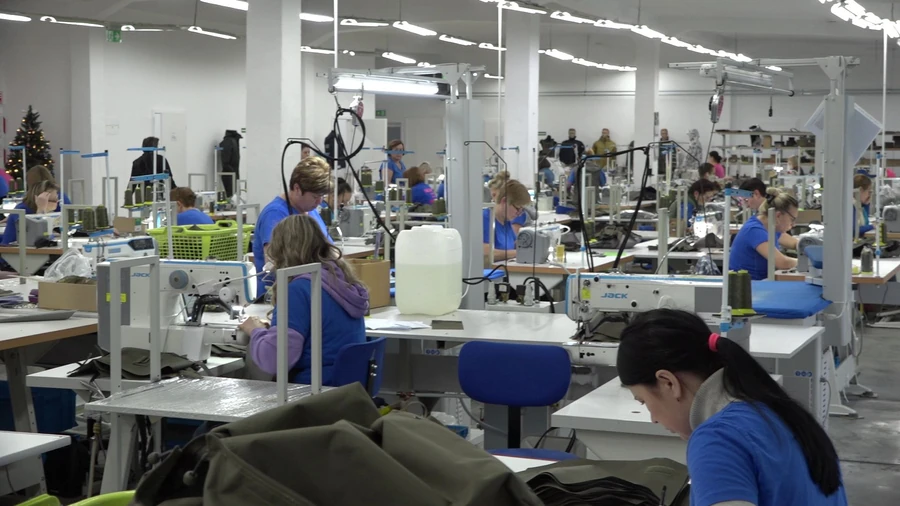
Unifeq’s decision to expand production in Poland reflects this shift. By consolidating operations into a single, large-scale facility, the company is able to manufacture everything from textiles and carriers to ballistic plates and helmets within the EU. This not only reduces dependence on external suppliers but also enables faster response to urgent requirements, which is an essential advantage in a rapidly evolving security environment.
Local production also carries environmental benefits. Shorter supply chains mean reduced transportation emissions, while tighter control over manufacturing processes allows companies to minimize waste and adopt more sustainable materials.
Customization as the New Standard
Alongside trust and localization, customization is emerging as a defining feature of modern body armor development. The days of one-size-fits-all solutions are fading, replaced by products tailored to specific missions, threats, and user needs. According to Dzwoniarski, “Unifeq’s approach, our strategy, is to develop really highly customized products for the client’s needs. But based on the well-tested ballistic solutions.”
This shift is driven in part by the complexity of today’s operational environments. Different regions face different threat profiles, and end users—from military personnel to law enforcement—require equipment that reflects those realities. Certification standards such as VPAM in Europe further reinforce the need for region-specific solutions.
Manufacturers are responding by developing modular and adaptable systems. Whether prioritizing lightweight mobility or maximum protection, clients can increasingly specify exactly what they need. Customization also extends to ergonomics and inclusivity. One area seeing growing attention is the development of body armor designed specifically for female personnel. Rather than adapting existing designs, this requires fundamentally different approaches to geometry and shaping in order to ensure both comfort and full ballistic protection. Dzwoniarski points out that “this kind of design is completely different, and Unifeq has some well-developed solutions for those kinds of products to be able to make sure that the solution will be highly ergonomic for the user, but also fully safe.”
Manufacturers are increasingly using pre-shaped ballistic solutions and modified geometries to better fit different body types. As more European tenders begin to specify requirements for female-specific or ergonomically optimized equipment, this is becoming a key area of innovation, balancing safety, mobility, and wearability in ways that traditional designs often overlooked.
Educating the Client
Equally important is the role of education. As industry experts point out, the factors influencing ballistic performance are numerous and often misunderstood. By working closely with clients, manufacturers aim not only to deliver products but also to guide decision-making, ensuring that specifications align with real-world needs.
This complexity means that lighter or cheaper solutions are not always better—and in some cases, may compromise safety. As a result, companies are placing greater emphasis on working closely with clients to explain these trade-offs and guide decision-making.
“Part of our mission is to educate the clients about what is really needed from the user perspective, what is really needed on the field. And also to protect them. Unifeq aims to deliver products that really work and protect users from the threats that they can face.” (Dzwoniarski)
Rather than simply delivering products, manufacturers are increasingly acting as partners, helping clients define specifications that truly match operational needs. This advisory role is becoming essential in an industry where misunderstandings can have serious consequences.
From Heritage to Innovation: The Kalkan Concept
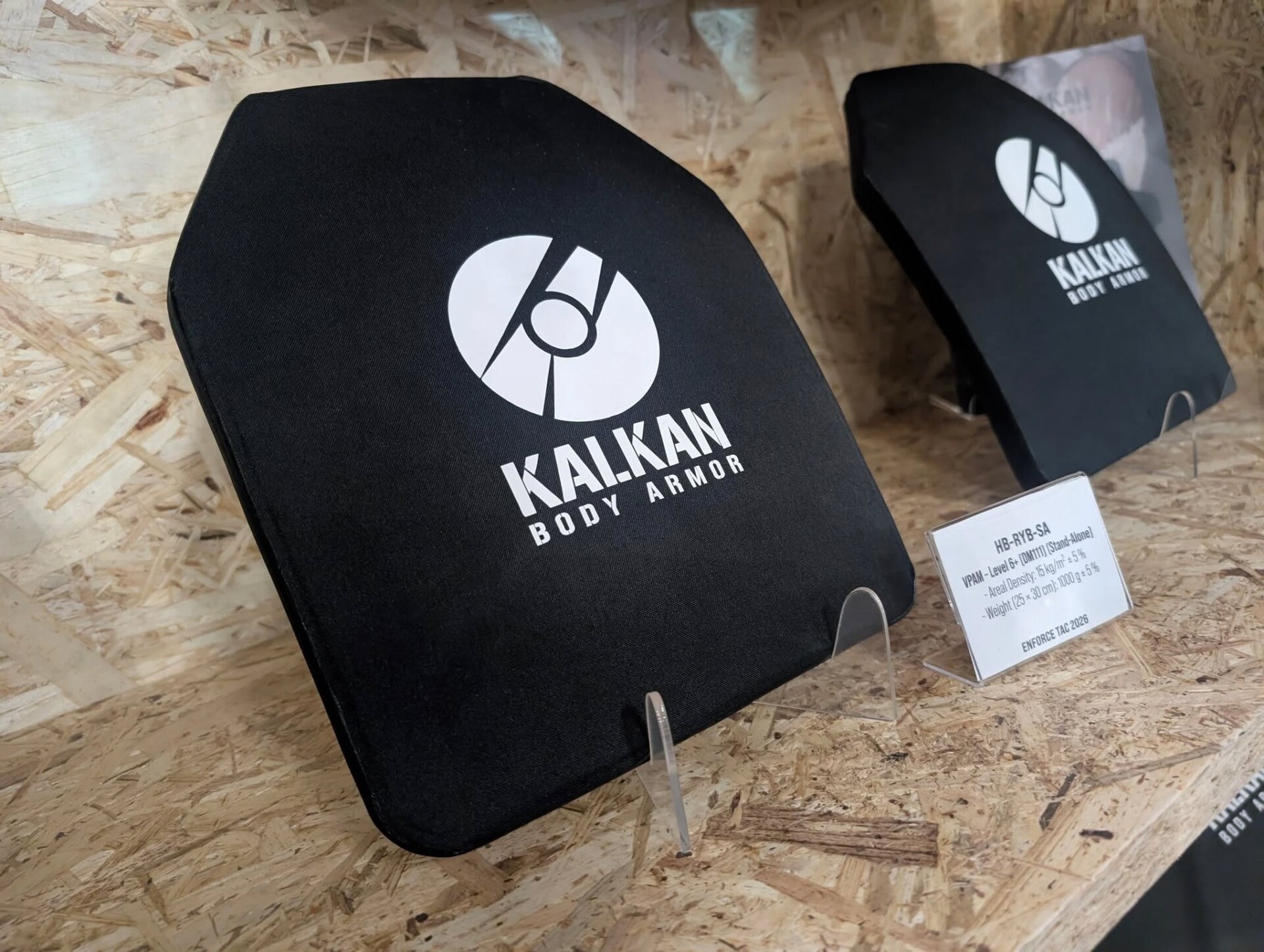
This evolution is also reflected in how companies present their products. Unifeq has introduced “Kalkan” as its dedicated ballistic sub-brand, drawing inspiration from a historical European shield in the 17th century, made from animal skin, wood, and steel. The main characteristic of the shield was that it was both lightweight and durable. The name reflects the philosophy behind the product line: combining advanced composite materials with a focus on protection, mobility, and real-world performance. Even the branding emphasizes this idea, with design elements referencing equipment that has been tested and proven in the field. “ The logo contains the shield, but also some scars, which means that it was in the field, it was tested, and it was working. So it is a lot about the durability, safety, and optimization of the products” (Dzwoniarski).
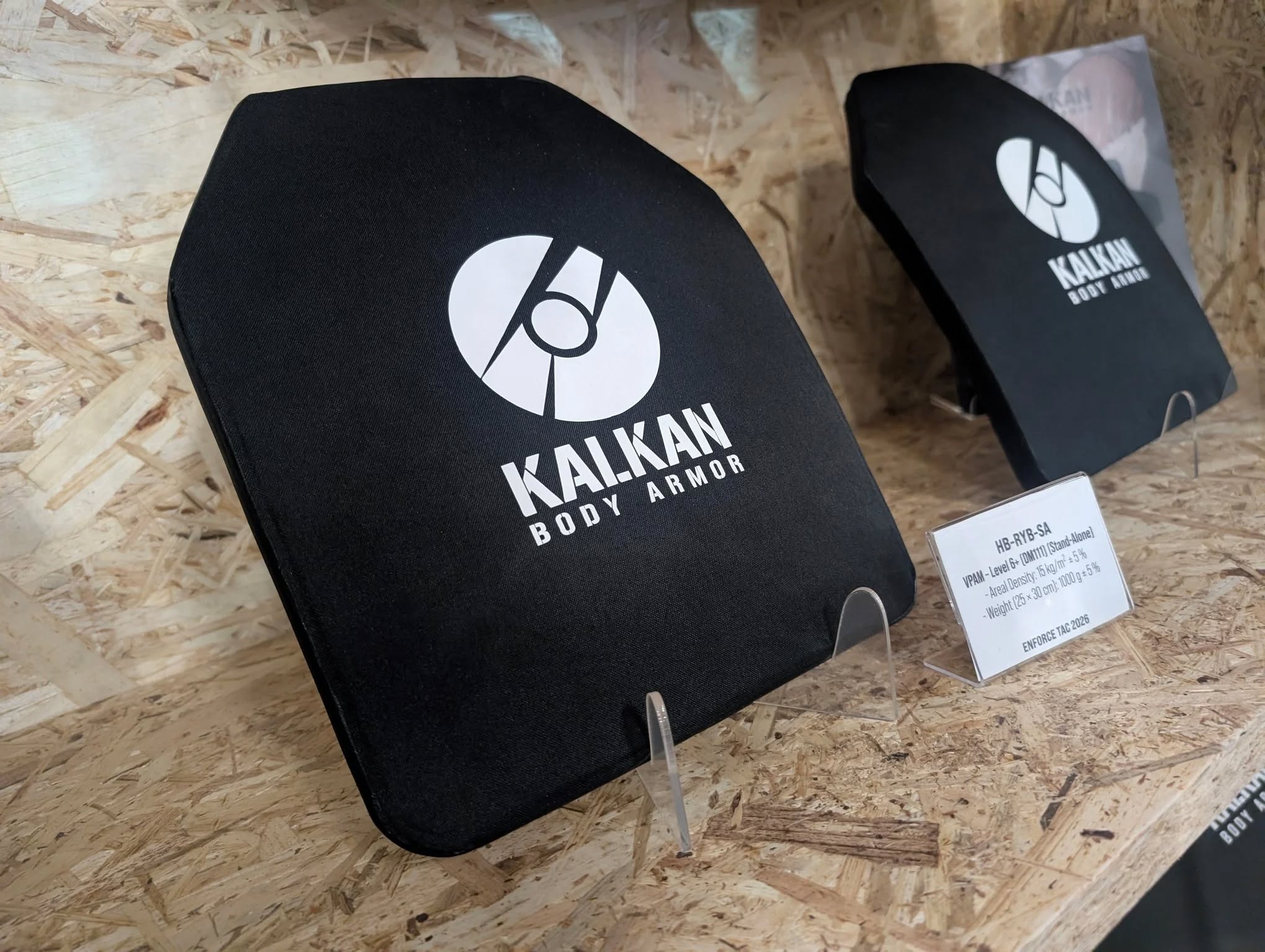
By linking historical concepts of protection with modern engineering, the Kalkan line represents a broader ambition to create technically advanced solutions, as well as being grounded in a clear understanding of what protection truly means in practice.
At Enforce Tac 2026 in Nuremberg, BodyArmorNews visited the Unifeq booth, where Krzysztof Dzwoniarski presented their new Kalkan soft and hard armor product line. Watch the video below to learn more about the Kalkan:
A New Model for Defense Manufacturing
Taken together, these trends point to a broader transformation within the industry. Trust is no longer built solely through brand reputation, but through transparency and rigorous validation. Manufacturing is no longer just about cost efficiency, but about sovereignty and resilience. And products are no longer standardized, but increasingly tailored to the individual.
For companies like Unifeq, this represents both a challenge and an opportunity. Entering the ballistic market requires not only technical expertise but also the ability to meet rising expectations across multiple fronts—performance, reliability, sustainability, and adaptability.
As demand for protective equipment continues to grow across Europe, the companies that succeed will be those that can integrate all three pillars: uncompromising safety, localized production, and client-driven design. In a field where lives depend on every decision, anything less is no longer enough.