

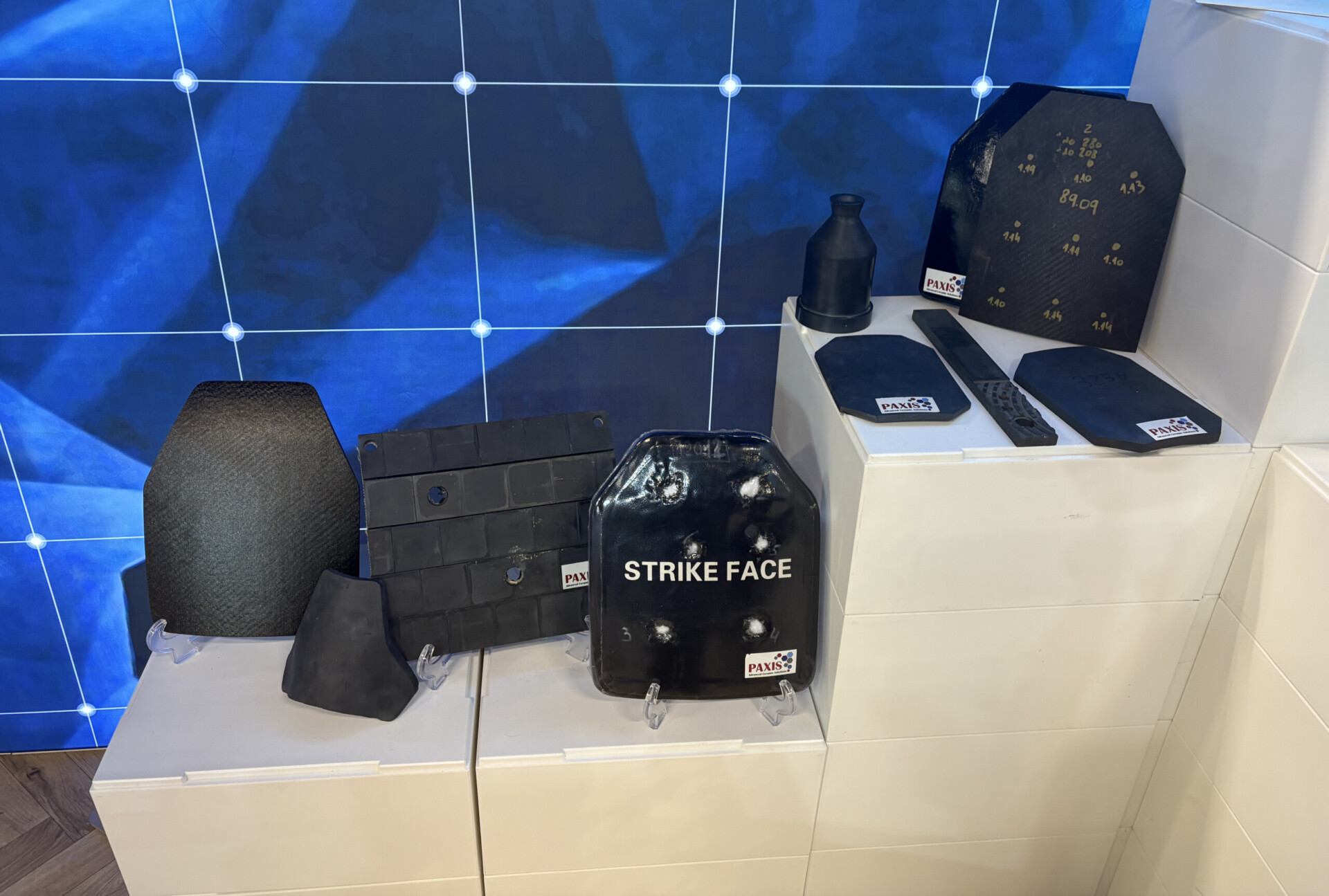

Modern ceramic armor systems are evolving in response to increasingly complex operational requirements, where weight, durability, and adaptability must be carefully balanced. Manufacturers are moving beyond standard material solutions toward more integrated approaches that combine advanced ceramics, composites, and tailored geometries. In this context, Paxis is focusing on end-to-end control of materials and design to develop armor systems that address both current performance demands and emerging challenges in the field. In an interview with Vladi Kushnirov, R&D and Engineering Manager at Paxis, BodyArmorNews explored how the company is approaching these challenges through materials science and design innovation.

From raw materials to final systems
Founded in Israel more than a decade ago, Paxis operates across the full spectrum of ceramic armor development. Rather than relying on external suppliers for key components, the company emphasizes a vertically integrated model. “We can do the whole process from the powder or slurry to the high-end solution,” Kushnirov explains.
This approach allows Paxis to work directly with core materials such as boron carbide, silicon carbide, and alumina—three of the most widely used ceramics in ballistic protection. Each material presents different trade-offs in terms of density, hardness, and cost, and the ability to fine-tune compositions enables more targeted solutions. “Because we control the composition and geometry completely, we can adjust the process to the customer’s application,” he adds.
Materials engineering and customization
One of the defining challenges in armor design is balancing protection with weight and usability. Increasingly, customers are demanding lighter systems without compromising effectiveness. “In recent years, companies want to reduce the thickness of the ceramic as low as possible,” says Kushnirov.
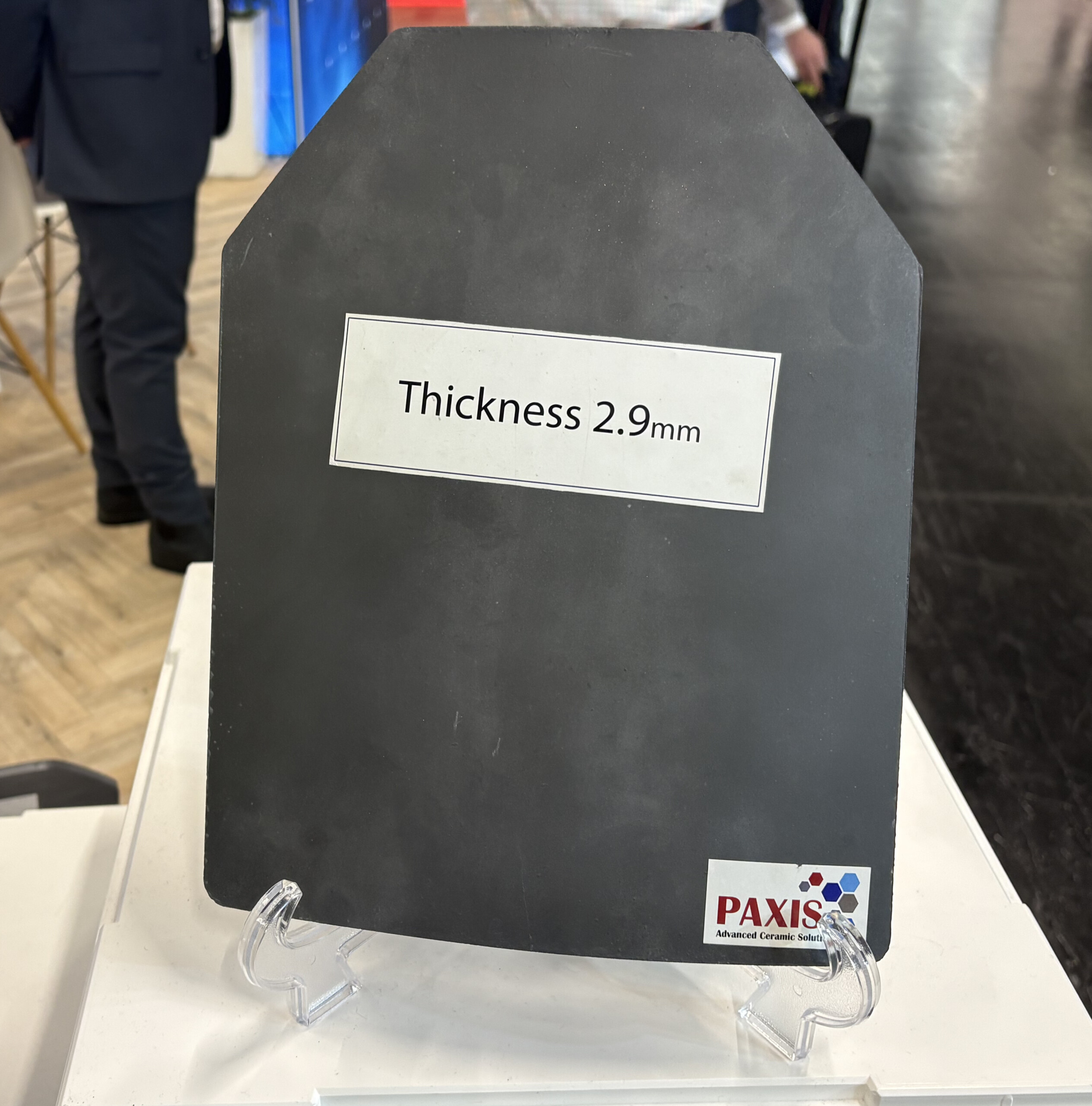
A key theme throughout the interview was flexibility. Rather than relying solely on off-the-shelf components, Paxis develops its own ceramic compositions and processing techniques. This enables the company to respond to specific customer requirements, such as weight reduction, shape optimization, or multi-hit performance.
The company also works with both monolithic plates and modular, tile-based systems. In addition to ceramics, Paxis integrates composite materials and explores ceramic matrix composites (CMCs), which are increasingly used in high-performance environments due to their strength and heat resistance. Another practical capability is machining ceramics in their “green state”—before final densification—allowing rapid prototyping of complex geometries without requiring immediate investment in custom molds.
Research directions and emerging ideas
Beyond established materials, Paxis is exploring ways to improve how armor responds to impact. Recent R&D efforts at Paxis have focused on improving multi-hit performance and reducing the effects of ballistic impact. One approach involves introducing small amounts of additional ceramic phases, such as titanium diboride, into existing materials to influence how cracks propagate under stress.
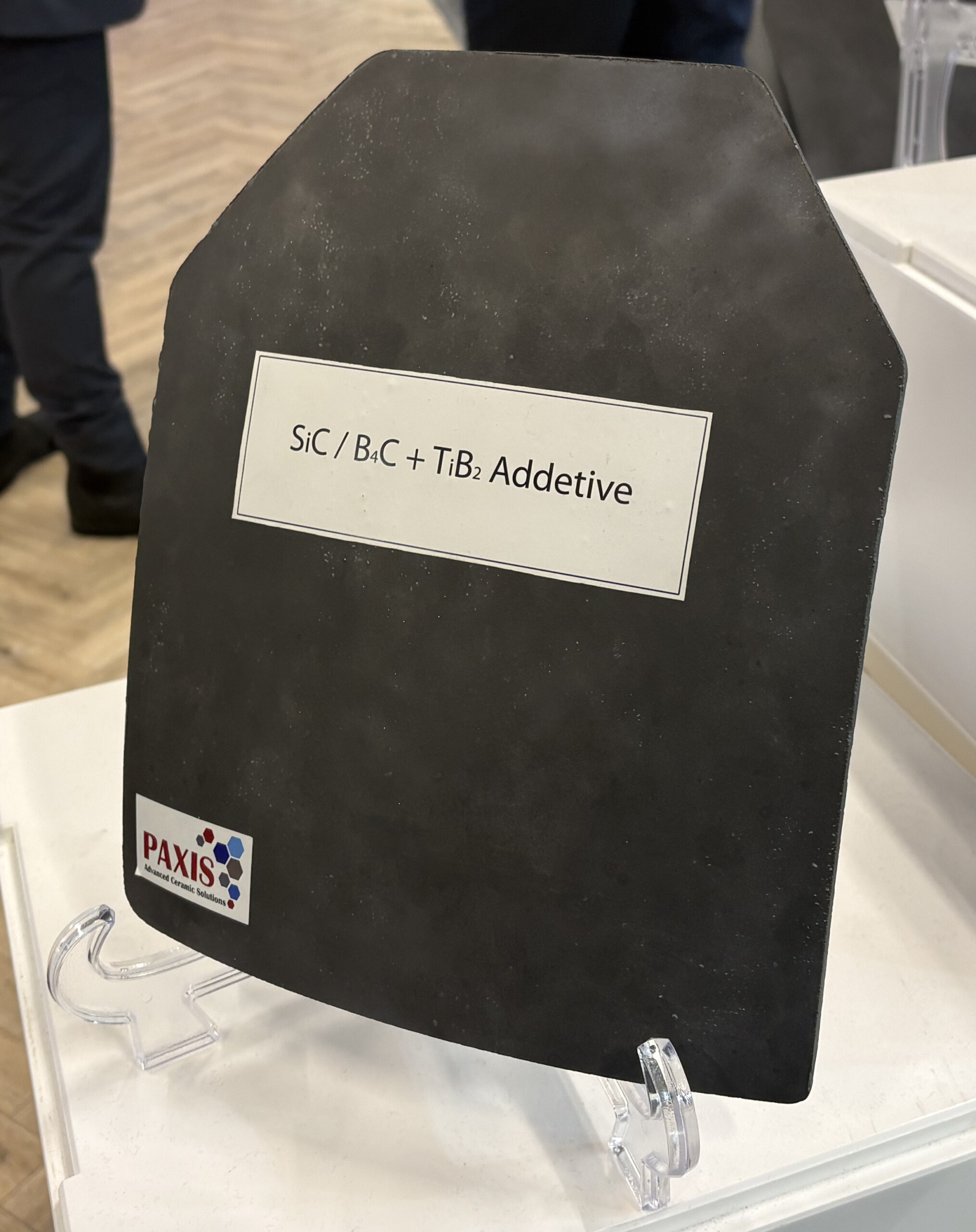
Kushnirov also refers to ongoing research into how stress waves move through layered or mixed-material ceramics. These developments remain in the experimental stage, but they reflect a broader trend in the industry: shifting from purely material strength toward more sophisticated control of energy dissipation during impact.
Expanding requirements: fit, function, and sustainability
As the use of personal armor broadens, so do the requirements placed on it. The demand for lighter and thinner armor systems is thus growing. Paxis reports working on reducing ceramic thickness while maintaining protective performance, although such advances typically depend on the full system design, including backing materials.
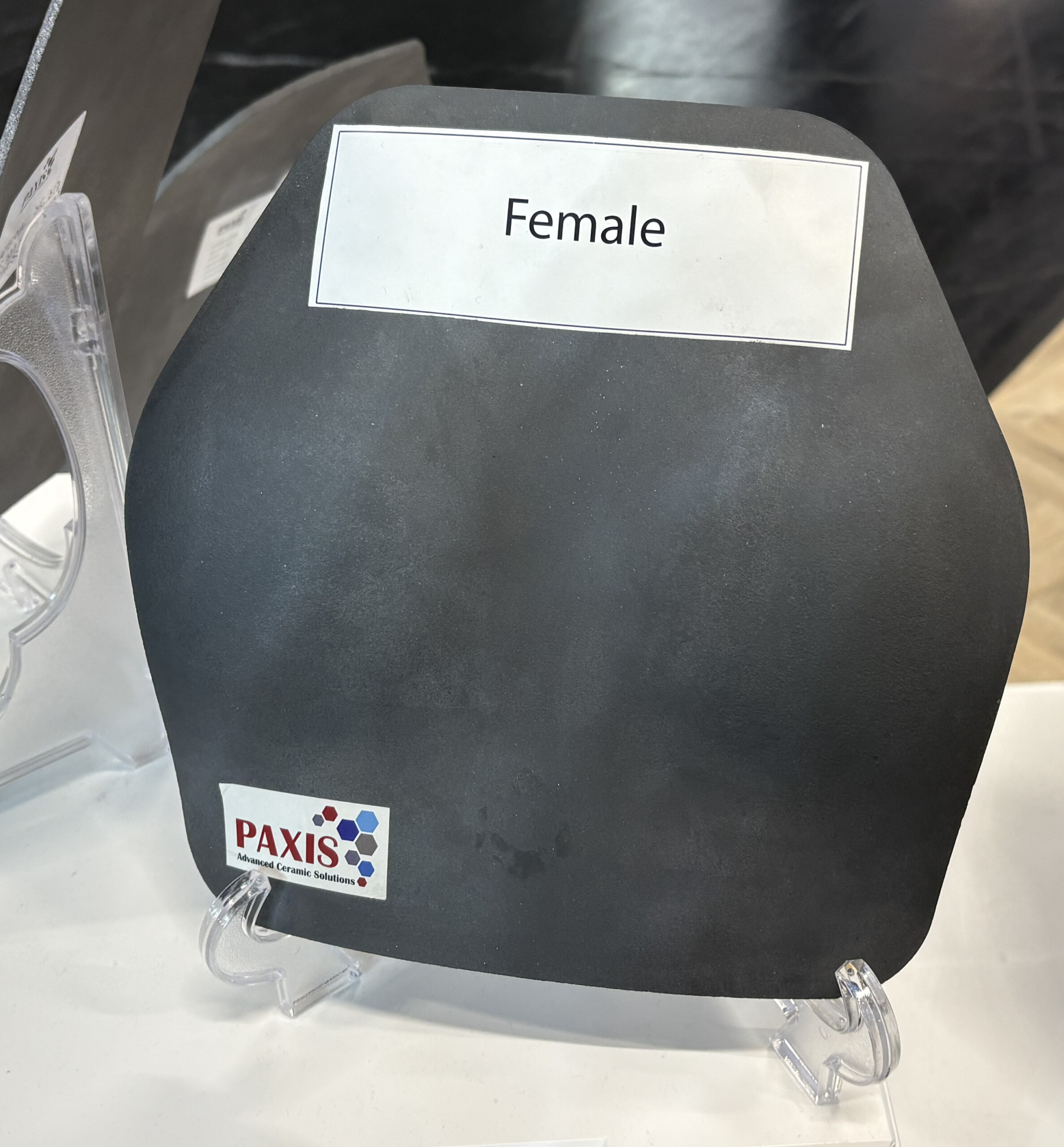
Another area of growing importance is the design of armor specifically suited to female body geometry. This involves adapting shapes and configurations to improve fit and comfort without compromising protection—an area that has gained attention as more women serve in operational roles.
At the same time, environmental considerations are becoming more visible in the manufacturing process. “Customers check us about that issue as well,” Kushnirov notes, referring to sustainability and production practices. In response, companies like Paxis are investing in automation and exploring ways to reduce waste, including the potential reuse of ceramic materials that do not meet final specifications.
Looking ahead
When asked about the future of ceramic armor, Kushnirov highlighted two key directions: reducing the residual energy transferred to the wearer after impact, and developing more flexible protective systems. Both areas aim to improve not just survivability, but also mobility and comfort.
“We want to reduce the energy transferred to the backside of the plate to a minimum.”
This focus on mitigating blunt force effects—alongside ongoing work on lighter and potentially more flexible systems—points toward a new phase in armor design, where protection is measured not just by resistance, but by overall survivability and wearability. While some of these developments remain in the research phase, they reflect broader trends in the industry toward smarter material design and more adaptable protection systems.
Even when materials science advances, the challenge remains the same: creating protection that is both effective and practical. Companies like Paxis are working at that intersection, where incremental improvements in composition and design can translate into meaningful differences in the field.