
The body armor and personal protection sector is undergoing rapid transformation, driven by rising global demand, shifting threat environments, and structural changes in manufacturing and supply chains.
Exponential Demand Driving Capacity Expansion
Over the past four to five years, demand for protection systems has increased sharply, reflecting broader body armor market growth. This surge has prompted manufacturers to scale up production capacity and improve operational efficiency. Investment is being directed not only toward expanding output but also toward automation and process optimization across factory floors.
As Karan Gupta, Vice President – International Sales at MKU, notes:
“In the last four to five years, the demand for protection systems has been growing exponentially.”
Regionalization and the ‘Made in Europe’ Shift
A key development in the sector is the move toward regionalized manufacturing. European procurement strategies increasingly prioritize locally produced defense equipment, aligning with broader European defense procurement strategy initiatives. This shift is encouraging suppliers to establish or expand operations within the region. MKU has responded by increasing capacity at its facility near Hamburg, aligning with the European Union’s push for domestically produced systems and strengthening its position in the European market.
Supply Chain Constraints and Industry Adaptation
Despite strong demand, supply chain challenges continue to affect the industry. Raw material availability has not kept pace with growth, while regulatory restrictions complicate the cross-border movement of defense products. These challenges reflect wider global supply chain disruptions in defense manufacturing, pushing manufacturers to strengthen supplier relationships and build more resilient procurement networks. At the same time, sustainability considerations are being integrated across the product lifecycle, from development and manufacturing to disposal.
Evolving Threats Redefining Product Design
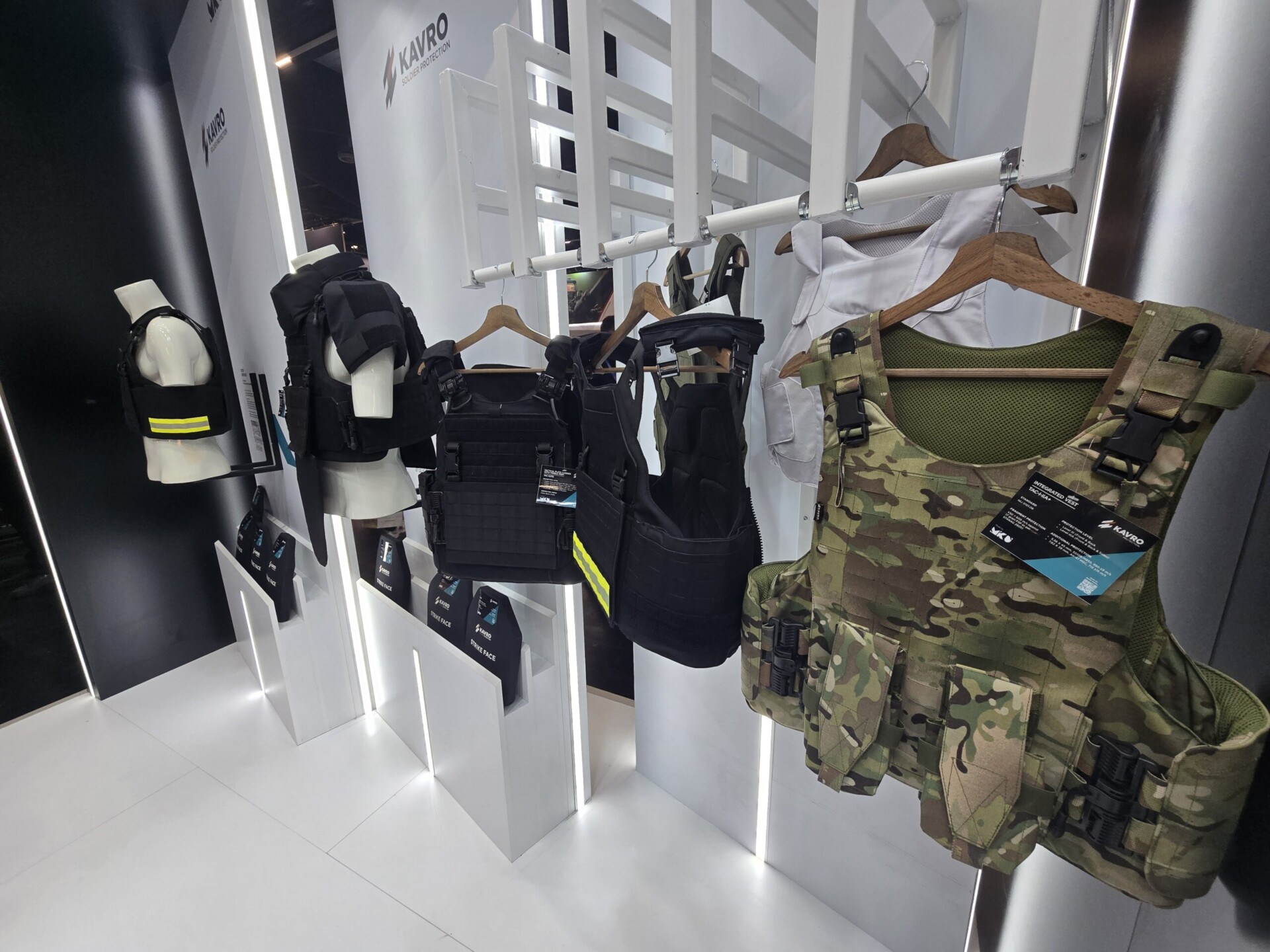
Shifting threat environments are significantly influencing product development. The increasing prevalence of fragmentation protection in modern armor requirements, driven by drones, artillery, and explosive devices, has led to greater demand for extended-coverage body armor systems. Modern designs now go beyond traditional torso protection to include shoulders, neck, and groin areas. At the same time, the need for protection against direct rifle fire remains critical, particularly in close combat scenarios. This is driving innovation in lightweight, high-performance ballistic systems that maintain protection while reducing weight and minimizing deformation.
Regional Requirements Shape Technical Priorities
Operational contexts vary widely across regions, shaping technical requirements. In India, where close-quarter combat is more common, demand is focused on armor capable of withstanding direct hits. In contrast, European requirements, shaped in part by observations on the impact of the war in Ukraine on defense equipment demand, place greater emphasis on protection against fragmentation and long-range threats such as drones and explosive munitions. These differences require manufacturers to adapt product development strategies to specific end-user environments, balancing protection levels with mobility and comfort.
Quality Assurance Across Global Standards
Ensuring consistent quality across international markets remains a core priority. Manufacturers rely on established certification frameworks and rigorous multi-stage testing processes, ensuring compliance with NIJ standards and ballistic testing as well as other global benchmarks.
Major Contracts Signal Market Momentum
Recent contract activity highlights both the scale and stability of demand. Large framework agreements, including one for over 100,000 body armor systems and ballistic helmets in Southeast Asia, demonstrate sustained procurement at scale. Long-term renewals with existing customers further reinforce product reliability and trust.
MKU’s presence spans multiple regions, including contracts with special forces in India and customers across Europe, including Nordic and Baltic countries, as well as specialized units such as French special operations forces.
Expanding Beyond Military: The Rise of Civilian Demand
The body armor market is also expanding beyond traditional military and law enforcement users. Civilian demand, particularly from first responders, is increasing as risk awareness grows in non-combat environments. A notable example is the supply of body armor to hospitals in Estonia, reflecting a broader trend toward equipping medical and emergency personnel with protective solutions.
Designing for Different End Users
The diversification of users is influencing design priorities. Military personnel typically require equipment suitable for prolonged daily use in demanding conditions, while first responders prioritize comfort and flexibility for shorter, less frequent deployments.
“We focus on each user’s operating environment to give them the right balance between protection and comfort.”
Balancing Protection, Comfort and Future Growth
As the sector evolves, manufacturers must balance protection, weight, and wearability while navigating supply chain pressures and regulatory complexity. With demand continuing to grow and threat environments becoming more complex, the ability to adapt to regional requirements, innovate in product design, and maintain consistent quality will define success in the global body armor market.