

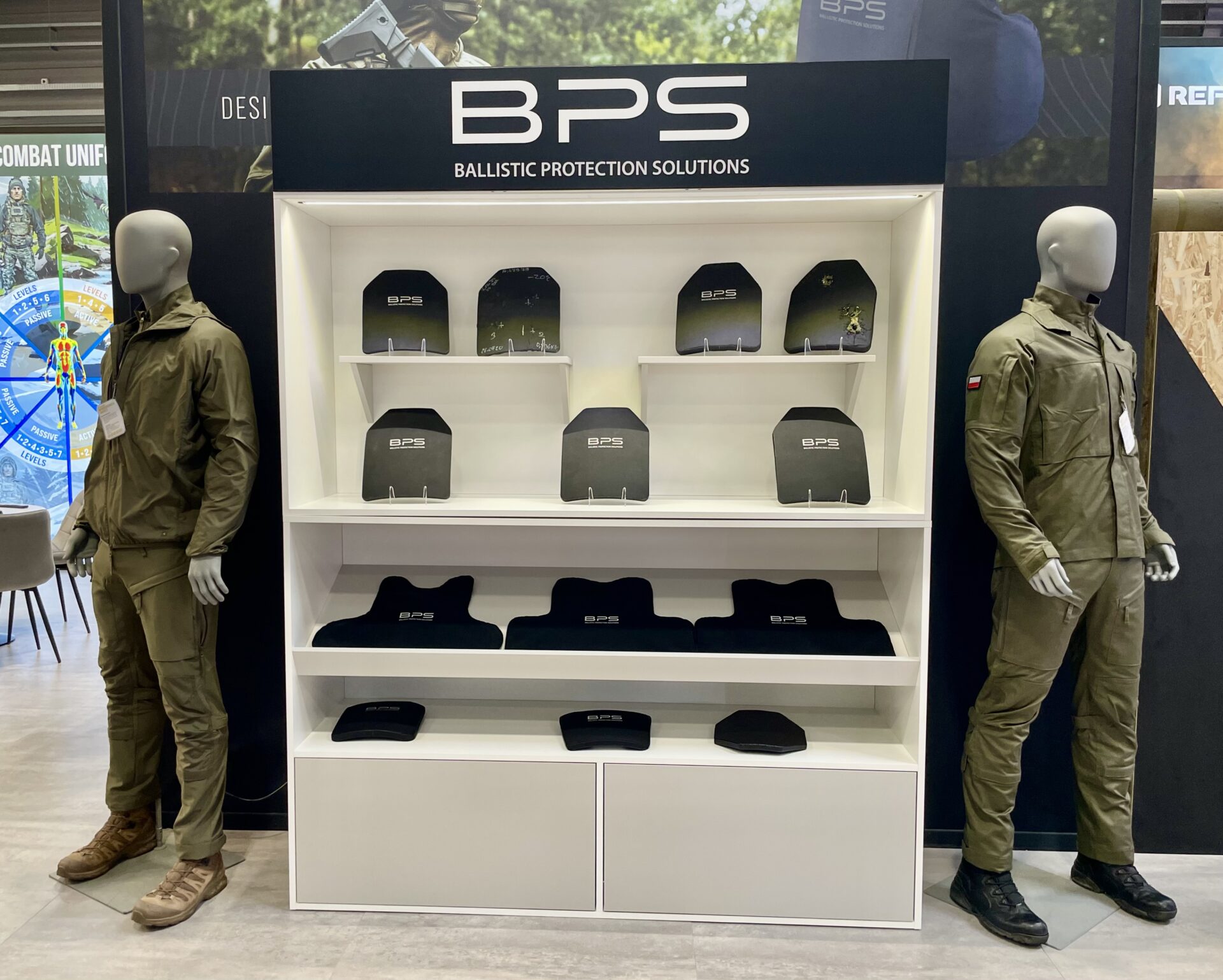


Future Forces Forum 2026 brought together defense experts from all around the world. As exhibitors, delegates and military personnel discussed their common goals of keeping Europe safe, BodyArmorNews met Ben Shephard and Krzysztof Dzwoniarski at UNIFEQ’s booth. Shephard, UNIFEQ’s International Sales Consultant and Dzwoniarski, Head of Ballistics at UNIFEQ, discussed the Polish company’s recent developments and its emphasis on keeping ballistic manufacturing within Europe.
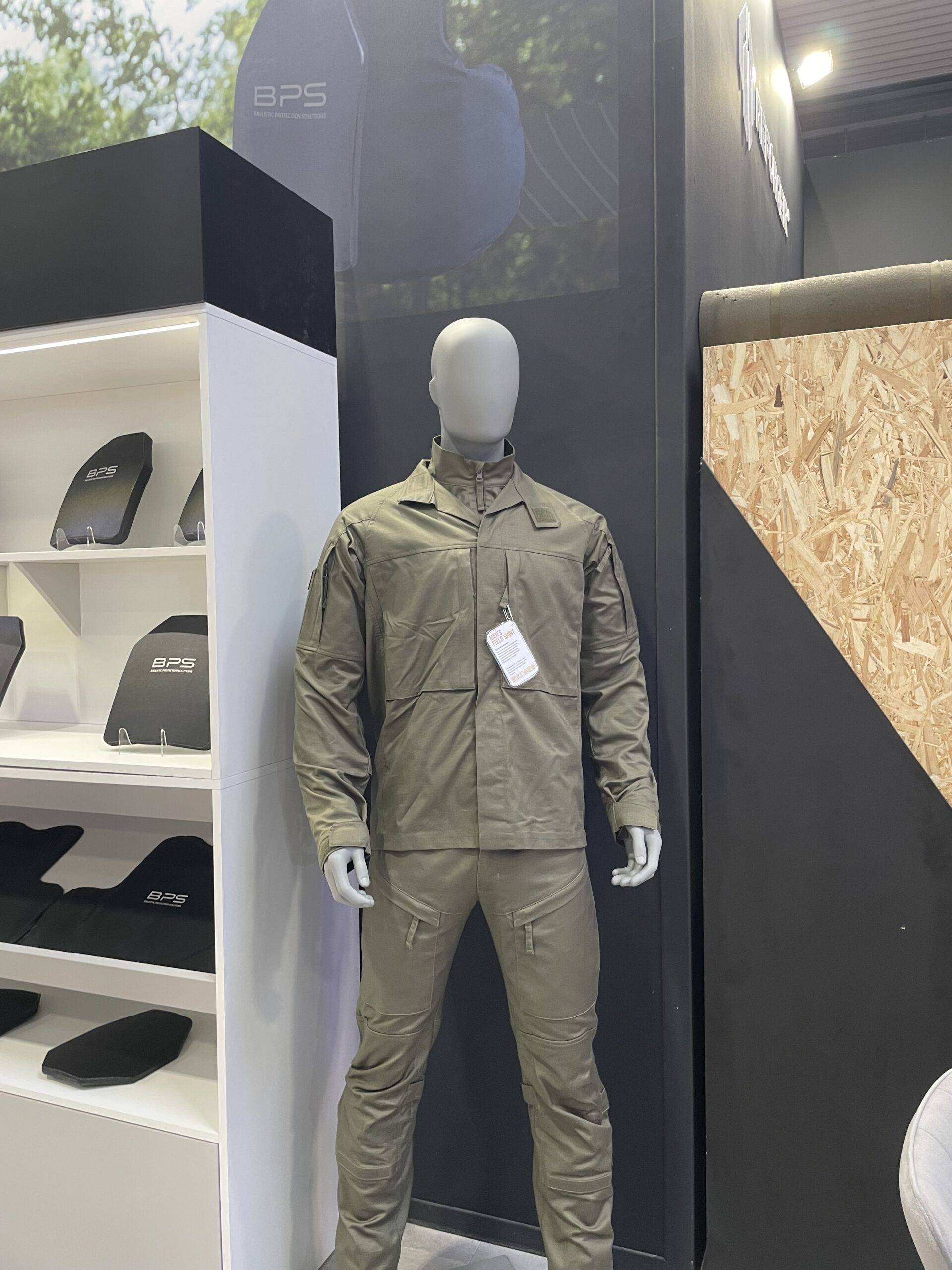
With a focus on combat and field uniforms, UNIFEQ has been expanding their soft ballistics and hard ballistic shield collections. The company is aiming to introduce their own helmets next year. “We have the machinery set up and ready for use. We’re finalizing the painting room for the painting of the helmets. We’re really excited about this project”, Dzwoniarski explained.
One of UNIFEQ’s main focuses within ballistic technology is keeping its products lightweight. Dzwoniarski demonstrated the lightness of their hard ballistic material. “We are proud to introduce some very light products, like our VPAM6 product, which only weighs 10.5 kilo per square meter. With that material, a plate of 25cm x 30cm can weigh as little as 710 grams.”
Building Strength Through European Partnerships
Dzwoniarski emphasized the value of UNIFEQ’s partnerships around Europe. “When it comes to the suppliers of the materials, we have really well-developed cooperations with the biggest, most important suppliers in Europe. We’re cooperating with Barrday, Avient, Teijin, and ProSystems. When it comes to the ceramics, we are cooperating with Schunk. We have a well-developed source of raw materials, which is extremely critical. We can choose the optimum materials when it comes to the performance and price, to fit perfectly into the client’s needs.”

UNIFEQ has been growing steadily as a ballistic and protective gear manufacturer, with Shephard detailing the company’s established position in Europe. “UNIFEQ has been around for over 15 years, manufacturing textile products for European tenders. There is already an established network of partners who trust in what UNIFEQ can deliver. And because we’ve expanded the range into the ballistics for UNIFEQ, we’ve now brought those partners more products that they can work with us on.”
Expanding UNIFEQ’s Global Reach
UNIFEQ has grown steadily from mostly Polish and Northern European productions to partnering globally. Shephard explained the company’s recent expansions outside Europe.
“We’ve expanded our network outside of where UNIFEQ was traditionally comfortable, which was obviously Poland, but also the DACH region. The Nordics and the Baltic states. We’ve expanded to the rest of Europe, and we’ve now started working with partners in Asia, North America, South America and Africa, to expand UNIFEQ’s reach. We can tailor our products to meet those different customer requirements, whether they be in Brazil, Egypt, or in the Asian markets.”
We are also happy to work in close cooperation with medics on the frontline in Ukraine,
Dzwoniarski added. “We’re able to learn from them how the modern world looks, and what are the most common injuries. Based on that information, we’re able to design the solutions that answer current requirements.”
Securing Europe’s Supply Chain
In July, the Dutch Ministry of Defense faced criticism after deciding to potentially procure body armor manufactured by an Israeli company using Chinese ballistic fibers. Critics raised concerns regarding the safety of sourcing ballistic materials overseas. UNIFEQ prioritises sourcing their materials locally in Europe, avoiding concerns regarding the safety of their supply chain.
“We think this is one of UNIFEQ’s key strengths, and why the business has evolved from originally being a manufacturer in Asia to now dedicating a lot of its resources to manufacturing within Poland. The supply chain concerns are real”, Shephard explained. “We hear from a lot of our customers that they want to keep production and supply as local as possible, because of all the issues that you may have with the logistics of dealing with Asia. As well as obviously the concerns about future threats. By keeping it in Poland, we can safeguard that.”
According to Shephard, UNIFEQ is seeing a lot more clients prioritizing European production chains. He explained that there’s been a definite change in recent tenders. “There’s been a shift change in the tenders that we’re applying for now. Where they’re trying to limit the amount of Chinese products, both across the textile and ballistic sides. We feel we’re ahead of the curve there, with having spent the last few years building this brand-new ballistic production facility alongside our existing textile facility in Poland. To run at those tenders that are very specifically non-Asian.”
“Obviously, that brings a price, but what we’re hearing from across the European tender space is that people are prepared to sacrifice that by keeping within EU manufacturing. It is extremely important for UNIFEQ to have stable sources for materials. We are relying on the European producers because we know them, and we know that they can supply their own materials with the highest possible quality. We can have full control over the quality of our products. They can also provide us with stable deliveries of the materials.”
Rebuilding Europe’s Manufacturing Independence
After controversy arose in the Netherlands regarding the sourcing of ballistic materials overseas, the country decided to draft stricter regulations demanding ballistic fibers to be sourced within Europe. When asked whether other European countries should set stricter laws regarding the sourcing of ballistic materials, Shephard expressed doubt.
“I’m not sure whether it needs to be cast in law. For example, I deal with the Indian market and they have these [laws]. It does tie their hands quite considerably, because there are a lot of component parts that only come from Asia. It’s difficult to control every element of production and where everything comes from at this stage”, Shephard explained.
“I think how the European tenders are moving is the right way. They’re becoming less reliant on Asia. But I think cutting off all ties with Asia may be a step too far at this stage. At least until European manufacturing gets a chance to re-establish itself.”
“Before the war in Ukraine, price was the key winning factor in all tenders. European manufacturing was forced to shift to Asia, because otherwise they couldn’t compete. So I think whilst it’s the right initiative, European manufacturing needs to build itself back up and re-establish itself in all elements of the supply chain to be able to actually keep everything 100% European”, Shephard concluded.